
_900.png "Antifreeze Colours Explained: A UK Guide")
Understanding Anti-freeze Colours: Red vs Blue vs Green vs Pink - Explain OAT, IAT, HOAT Technologies and Compatibility
Choosing the right anti-freeze for your car isn't as simple as grabbing any bottle off the shelf. The rainbow of coolant colours, red, blue, green, pink, orange, and yellow, can be confusing for even experienced motorists. However, understanding what these colours represent and the underlying coolant technologies can save you from expensive engine damage and ensure your car runs optimally for years to come.
In this comprehensive guide, we'll demystify anti-freeze colours, explain the critical differences between IAT, OAT, and HOAT coolant technologies, and help you understand compatibility issues that could affect your engine's health.
What is Anti-freeze and Why Does Colour Matter?
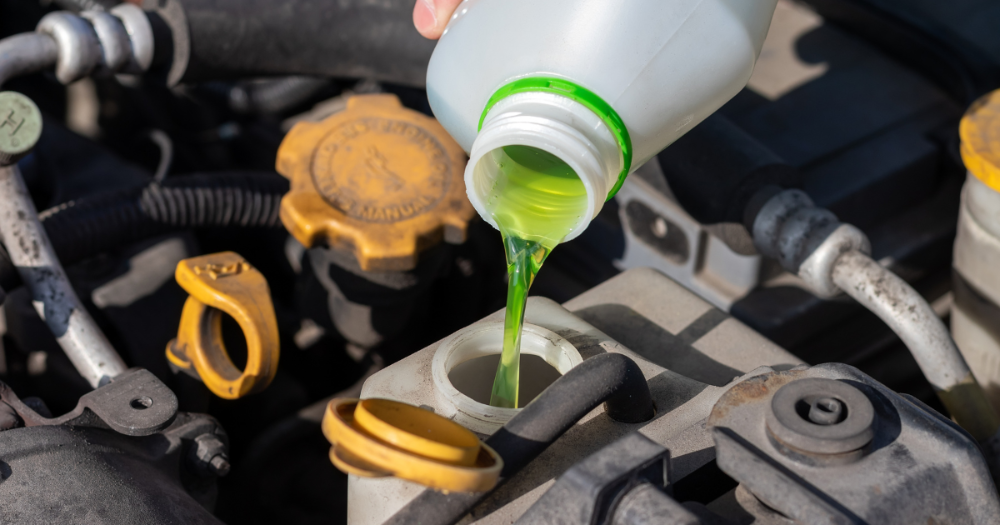
Anti-freeze, also known as engine coolant, is a vital fluid that regulates your engine's temperature by preventing freezing in winter and overheating in summer. Modern anti-freeze is typically a mixture of ethylene glycol or propylene glycol, water, and various chemical additives that prevent corrosion, scale buildup, and cavitation.
The colour of anti-freeze serves as a visual identifier for the type of coolant and its chemical composition. While colour was once a reliable indicator of coolant type, manufacturers have increasingly used different colours for similar formulations, making it essential to check the coolant technology type rather than relying solely on colour.
According to the Engine Manufacturers Association, using the wrong coolant type can lead to corrosion, reduced heat transfer efficiency, and premature cooling system failure, potentially costing thousands in repairs.
The Three Main Coolant Technologies: IAT, OAT, and HOAT
Before diving into specific colours, it's crucial to understand the three primary coolant technology categories that dictate performance characteristics and compatibility.
Inorganic Additive Technology (IAT)
IAT coolants represent the traditional, "conventional" anti-freeze formulation that has been used since the mid-20th century. These coolants contain inorganic corrosion inhibitors such as silicates and phosphates.
Characteristics of IAT coolants:
- Typically green in colour (though not exclusively)
- Service life of approximately 2-3 years or 50,000-80,000 kilometres
- Effective for older vehicles manufactured before the mid-1990s
- Contains silicates that form a protective layer on metal surfaces
- Compatible with copper, brass, and cast-iron cooling system components
- Requires more frequent replacement compared to newer technologies
The shorter lifespan of IAT coolants stems from the depletion of their inorganic inhibitors, which get consumed as they protect the cooling system from corrosion. Once these inhibitors are exhausted, the cooling system becomes vulnerable to corrosion and scale formation.
Organic Acid Technology (OAT)
OAT coolants emerged in the 1990s as manufacturers sought longer-lasting coolant formulations with improved performance characteristics. These coolants use organic acids instead of inorganic salts as corrosion inhibitors.
Characteristics of OAT coolants:
- Available in multiple colours, including orange, red, pink, blue, and even dark green
- Extended service life of 5 years or 240,000 kilometres
- Designed for modern engines with aluminium components
- Does not contain silicates or phosphates
- Works differently from IAT by attacking corrosion spots rather than coating all surfaces
- Standard coolant for many General Motors, Volkswagen, and European vehicles
OAT coolants function by targeting specific areas where corrosion begins, rather than coating the entire cooling system. This targeted approach results in less additive depletion and extends the coolant's effective lifespan significantly. Research from SAE International has demonstrated that OAT coolants provide superior long-term corrosion protection for aluminium cooling system components.
.png)
Hybrid Organic Acid Technology (HOAT)
HOAT coolants combine the best features of both IAT and OAT technologies, incorporating both organic acids and some inorganic additives (typically silicates) to provide comprehensive protection.
Characteristics of HOAT coolants:
- Commonly yellow, orange, pink, blue, or red
- Service life is typically 5 years or 240,000 kilometres
- Contains low levels of silicates combined with organic acids
- Designed to protect both aluminium and older metal components
- Widely used in Chrysler, Ford, and many Asian vehicle manufacturers
- Offers broad compatibility with various engine materials
There are several subcategories of HOAT coolants, including Phosphate-HOAT (P-HOAT) and Silicate-HOAT (Si-HOAT), each formulated for specific manufacturer requirements. German manufacturers, particularly Volkswagen Group (VW, Audi, SEAT, Škoda), use a designation system with "G" numbers: G11, G12, G12+, G12++, and G13, each representing different HOAT formulations. The hybrid approach provides immediate surface protection from silicates while benefiting from the long-term effectiveness of organic acids.
Decoding Anti-freeze Colours: What Each Colour Typically Means
While colour is not a definitive indicator of coolant type due to varying manufacturer standards, certain colours are commonly associated with specific formulations.
Green Anti-freeze
Green coolant is the traditional colour most people associate with anti-freeze. In most cases, green indicates an IAT coolant suitable for older vehicles.
Typical applications:
- European and domestic vehicles manufactured before 2000
- Vehicles with copper and brass radiators
- Classic cars and vintage vehicles
- Some Asian manufacturers have a legacy formulation
However, some manufacturers now produce OAT or HOAT coolants in green, so always verify the technology type on the label rather than assuming based on colour alone.
Orange Anti-freeze
Orange coolant typically indicates an OAT formulation and is one of the most common colours for extended-life coolants.
Typical applications:
- General Motors vehicles (DEX-COOL)
- Volkswagen and Audi vehicles
- Many European manufacturers
- Vehicles requiring silicate-free coolant
GM's DEX-COOL, perhaps the most famous orange coolant, revolutionised coolant longevity when introduced in 1996. However, it's critical to note that DEX-COOL must not be mixed with conventional green IAT coolants, as this can create a gel-like substance that clogs cooling passages.
.png)
Red and Pink Anti-freeze
Red and pink coolants can indicate either OAT or HOAT formulations, depending on the manufacturer, making these colours particularly confusing.
Typical applications:
- Toyota and Lexus vehicles (often pink or red HOAT)
- Honda vehicles (typically blue, but some red formulations exist)
- Nissan vehicles
- Some European manufacturers
Toyota's long-life red coolant and Honda's blue coolant are examples of manufacturer-specific formulations that may not be directly compatible with other brands despite similar colours.
Blue Anti-freeze
Blue coolant can represent several different technologies depending on the manufacturer and region. In the UK, blue is increasingly common across various manufacturers.
Typical applications:
- Honda and Acura vehicles (OAT formulation)
- Many European vehicles (often HOAT)
- BMW and Mercedes-Benz vehicles
- Certain high-performance applications
- Vehicles requiring phosphate-free coolant for aluminium protection
The variation in blue coolant formulations highlights why colour alone cannot determine compatibility; always check the specification rather than matching by appearance.
.png)
Yellow and Gold Anti-freeze
Yellow or gold coolants are typically HOAT formulations designed for a broad range of vehicles.
Typical applications:
- Ford vehicles (Motorcraft Gold)
- Chrysler vehicles
- Some Mercedes-Benz vehicles
- Universal or multi-vehicle HOAT formulations
These coolants often market themselves as "universal" or compatible with multiple coolant types, though caution is still warranted when mixing coolants.
Understanding Coolant Compatibility: Can You Mix Different Colours?
The compatibility question is where many motorists make costly mistakes. The simple answer is: mixing different coolant technologies can cause serious problems, regardless of colour matching.
Why Mixing Coolants is Problematic
When incompatible coolant technologies mix, several chemical reactions can occur that compromise cooling system protection. Mixing IAT with OAT coolants can cause the organic acids to react with silicates, forming gel-like precipitates that clog radiator tubes, heater cores, and water pump passages. This gel formation restricts coolant flow, leading to localised hot spots and potential engine overheating.
Additionally, mixing coolants can neutralise the corrosion inhibitors in both products, leaving your cooling system unprotected. The protective properties of each coolant type rely on specific chemical balances that become disrupted when combined with incompatible formulations.
Safe Mixing Practices
If you must add coolant in an emergency situation and the correct type isn't available, plain distilled water is often a safer temporary solution than mixing incompatible coolant types. Water won't provide freeze or corrosion protection, but it won't cause the chemical reactions that create gel formations or precipitates.
For routine maintenance, the safest approach is to completely flush the cooling system when changing coolant types. A thorough flush removes the old coolant and any accumulated deposits, providing a clean slate for the new coolant to work effectively.
Some "universal" coolants claim compatibility with all coolant types. While these products use stabilising agents to minimise adverse reactions, they often represent a compromise in performance. Automotive experts at Which? and other UK consumer organisations note that manufacturer-specified coolants generally provide better long-term protection than universal alternatives.
How to Choose the Right Anti-freeze for Your Car
Selecting the correct anti-freeze involves more than picking a colour; it requires understanding your car's specific requirements.
Check Your Owner's Manual
Your vehicle's owner's manual (or handbook) specifies the exact coolant type required for your engine. This specification is based on extensive testing by the manufacturer to ensure compatibility with your cooling system materials and optimal engine protection. The manual will typically indicate the coolant technology (IAT, OAT, or HOAT) and may reference a specific specification number, such as BS 6580 (British Standard) or manufacturer standards like VW TL 774.
Identify Your Vehicle's Age and Make
Vehicle age and manufacturer often correlate with coolant requirements. European vehicles built before 2000 typically use green IAT coolants, while those manufactured after 2000 often specify OAT or HOAT formulations. German manufacturers like Volkswagen, Audi, BMW, and Mercedes-Benz typically have specific coolant requirements (often designated by G numbers such as G12, G12+, G13). French manufacturers like Peugeot, Citroën, and Renault also have their own specifications. Asian manufacturers like Toyota, Honda, and Nissan each have proprietary coolant formulations that may differ even within their own model lineups.
Read the Coolant Label Carefully
Modern coolant bottles display crucial information beyond just the colour. Look for technology type (OAT, IAT, HOAT), manufacturer approvals or specifications, service interval recommendations, and compatibility claims. A coolant labelled "meets or exceeds" specific manufacturer standards indicates it has been formulated to match that manufacturer's requirements.
Consider Premixed vs Concentrate
Coolants come in two forms: premixed (50/50 mixture of coolant and water) and concentrated (requiring dilution before use). Premixed coolants offer convenience and ensure proper mixture ratios, eliminating the risk of incorrect dilution. Concentrated coolants cost less per volume but require mixing with distilled water at the correct ratio, typically 50/50 for most UK climates.
Using distilled water rather than tap water is essential because tap water contains minerals that can contribute to scale formation and reduce coolant effectiveness. The 50/50 mixture provides freeze protection to approximately -37°C and boil-over protection to approximately 129°C in a pressurised system.
Maintenance Best Practices for Your Cooling System
Proper coolant maintenance extends beyond simply selecting the right product; it involves regular monitoring and timely service.
Regular Inspection Schedule
Check your coolant level monthly when the engine is cold. Low coolant levels can indicate leaks, which should be addressed immediately to prevent engine damage. Visually inspect the coolant's condition during oil changes; healthy coolant should be transparent or translucent in its designated colour, while cloudy, rusty, or contaminated coolant indicates service is needed.
Follow Recommended Service Intervals
IAT coolants require replacement every 2-3 years or 50,000-80,000 kilometres, while OAT and HOAT coolants typically last 5 years or 240,000 kilometres for the initial fill. Subsequent OAT and HOAT coolant changes may be required more frequently, often at 5 years or 160,000 kilometres. Always follow your manufacturer's specific recommendations, as they're based on your engine's particular requirements.
Professional Testing
Coolant test strips or refractometers can measure freeze point protection and coolant condition. Many garages and service centres offer free coolant testing, checking for adequate freeze protection, pH levels, and contamination. Testing is particularly valuable when purchasing a used car or if coolant service history is unknown.
System Flush Importance
When changing coolant types or performing scheduled maintenance, a complete system flush removes old coolant, rust particles, scale deposits, and contaminants. Partial coolant changes leave old coolant mixed with new, diluting the fresh coolant's protective additives and potentially causing compatibility issues.
.png)
Common Anti-freeze Myths Debunked
Several persistent myths about anti-freeze can lead to poor maintenance decisions.
Myth 1: Anti-freeze never wears out - Reality: All coolants degrade over time as corrosion inhibitors deplete. Even extended-life coolants require eventual replacement.
Myth 2: All same-colour coolants are compatible - Reality: Colour is not standardised across manufacturers. Orange coolant from one brand may differ significantly from another brand's orange formulation.
Myth 3: Universal coolants work in everything - Reality: While universal coolants aim for broad compatibility, manufacturer-specific coolants typically provide superior protection for your particular engine.
Myth 4: You can top off any coolant with water - Reality: Excessive water dilution reduces freeze protection and corrosion inhibitor concentration. Use the correct coolant type for top-offs.
Myth 5: Coolant colour fading means it needs replacement - Reality: While colour change can indicate contamination, the chemical effectiveness matters more than appearance. Testing is the only reliable assessment method.
Environmental and Safety Considerations
Anti-freeze requires careful handling due to its toxic properties and environmental impact.
Toxicity Awareness
Ethylene glycol, the most common anti-freeze base, is highly toxic to humans and animals. Its sweet taste makes it particularly dangerous to pets and children. Never leave anti-freeze containers open or spills uncleaned. Propylene glycol-based coolants offer a less toxic alternative, though they're still not safe for consumption.
Proper Disposal
Used anti-freeze is considered hazardous waste and must be disposed of properly. Never pour anti-freeze down drains, storm sewers, or on the ground, as it contaminates water supplies. Most garages, service centres, and civic amenity sites (household waste recycling centres) accept used coolant for recycling. Under UK environmental regulations, improper anti-freeze disposal can result in significant fines from the Environment Agency (or SEPA in Scotland, Natural Resources Wales in Wales, and NIEA in Northern Ireland).
Spill Cleanup
Clean anti-freeze spills immediately with absorbent materials. Kitty litter or commercial absorbents work well for small spills. Dispose of contaminated materials as hazardous waste. Anti-freeze makes surfaces extremely slippery, creating fall hazards in garages and driveways.
The Future of Engine Coolants
Coolant technology continues evolving to meet modern engine demands. Extended-life formulations are becoming standard, with some manufacturers testing 10-year/480,000-kilometre coolants. Electric vehicle coolants represent a new category designed for EV-specific challenges, including battery thermal management and electrical conductivity requirements, particularly relevant as the UK transitions to electric vehicles.
Biodegradable and environmentally friendly formulations are in development to reduce the environmental impact of coolant spills and disposal. As engine technologies advance, particularly with turbocharging, direct injection, and hybrid powertrains, coolant formulations must adapt to handle higher operating temperatures and protect new materials.
Conclusion: Making the Right Anti-freeze Choice
Understanding anti-freeze colours and the technologies behind them, AT, OAT, and HOAT, empowers you to make informed decisions about your car's cooling system maintenance. While green typically indicates conventional IAT coolant, orange often signals OAT formulations, and yellow, red, pink, and blue can represent various HOAT or OAT technologies; colour alone is never a reliable selection criterion.
Always consult your owner's handbook, verify the coolant technology type on the product label, and when in doubt, choose manufacturer-specified coolant over universal alternatives. Proper coolant selection and maintenance prevent expensive cooling system damage, extend engine life, and ensure your car performs reliably in all weather conditions, from harsh British winters to summer heatwaves.
The small investment in the correct coolant and regular maintenance pays dividends in engine longevity and peace of mind. Remember: when it comes to anti-freeze, the right choice isn't about finding the cheapest option or matching colours, it's about protecting your engine with the formulation designed specifically for your vehicle.
.png)
References and Further Reading
Society of Automotive Engineers (SAE) - "Coolant Technology and Testing Standards" - https://www.sae.orgBritish Standards Institution (BSI) - "BS 6580 Specification for Ethylene Glycol Based Engine Coolants" - https://www.bsigroup.comEngine Manufacturers Association - "Coolant Specifications and Guidelines" - https://www.enginemanufacturers.orgASTM International - "Standard Specification for Glycol Base Engine Coolant" (ASTM D3306) - https://www.astm.orgWhich? - "Car Maintenance and Antifreeze Guide" - https://www.which.co.ukRAC - "Antifreeze and Coolant Guide" - https://www.rac.co.ukEnvironment Agency - "Proper Disposal of Automotive Fluids" - https://www.gov.uk/environment-agencyVolkswagen Group - "Coolant Specifications (G12, G12+, G13)" - https://www.volkswagen.co.ukAA - "Vehicle Cooling System Care" - https://www.theaa.com